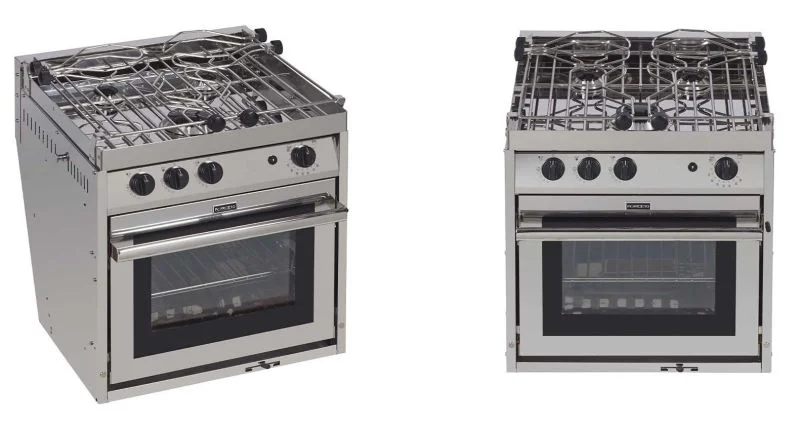
Force 10 Three-Burner Stove
Isola Naida is equipped with a propane-fueled Force 10 three-burner gimballed marine stove.
The stove is mounted on the aft bulkhead of the gallery rendering the gimbal feature unusable. The gimballed mounting is intended to reduce the likelihood of cookware sliding or tipping during normal vessel movement.
Fuel
The stove is supplied with propane from Isola Naida’s onboard propane system. The vessel carries two 20 lb propane cylinders in the lazarette, with one cylinder connected to the system at a time and the second maintained as a reserve.
Propane is supplied to the stove through the vessel’s propane solenoid system.
Configuration
Manufacturer: Force 10
Fuel: Propane
Burners: 3
Mounting: Gimballed
Location: Aft Galley Bulkhead
Operation
The propane supply must be enabled before the stove can be operated. The procedure for opening the propane cylinder and energizing the propane solenoid is documented here.
Each burner is independently controlled using its burner control. The appropriate ignition procedure should be followed when lighting a burner.
Ignition
To ignite one of the burners or the oven on the Force 10:
- Ensure propane has been correctly turned on
- Place a pot or pan over the burner you wish to ignite – this will help with ignition by trapping propane near the igniter
- Select the control knob associated with the burner you wish to ignite
- Rotate the control knob to its corresponding flame icon
- Allow gas to flow for 1 to 3 seconds
- Press the control knob in to engage the igniter
- Allow the flame to settle in place before adjusting the control knob to the desired heat level
Gimbal
In normal installation the stove’s gimbal allows the stove body to move with the vessel rather than remaining fixed relative to the surrounding cabinetry.
When the vessel is stationary or the stove is not being used underway, the gimbal should be secured as appropriate. Cookware should also be positioned and secured to minimize the possibility of movement or spillage.
Maintenance
Routine stove maintenance includes:
- Cleaning the burner assemblies and cooking surface
- Inspecting burner ports for blockage
- Inspecting burner controls
- Inspecting the gimbal mechanism
- Checking gimbal restraints and securing hardware
- Inspecting the propane hose and connection
- Checking for signs of corrosion or deterioration
Any propane leak, damaged hose, deteriorated fitting, or malfunctioning burner should be investigated before the stove is returned to service.